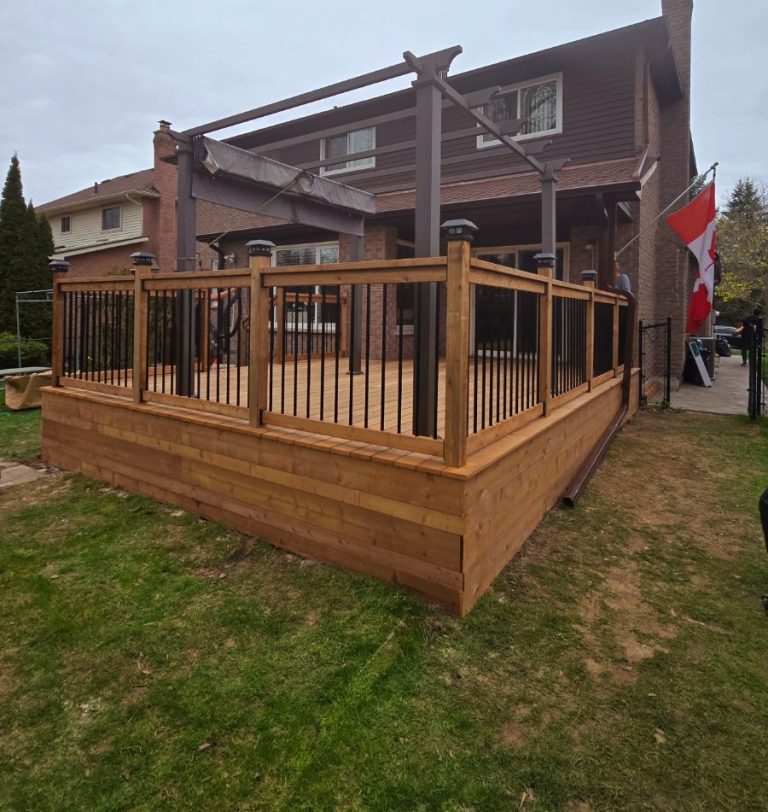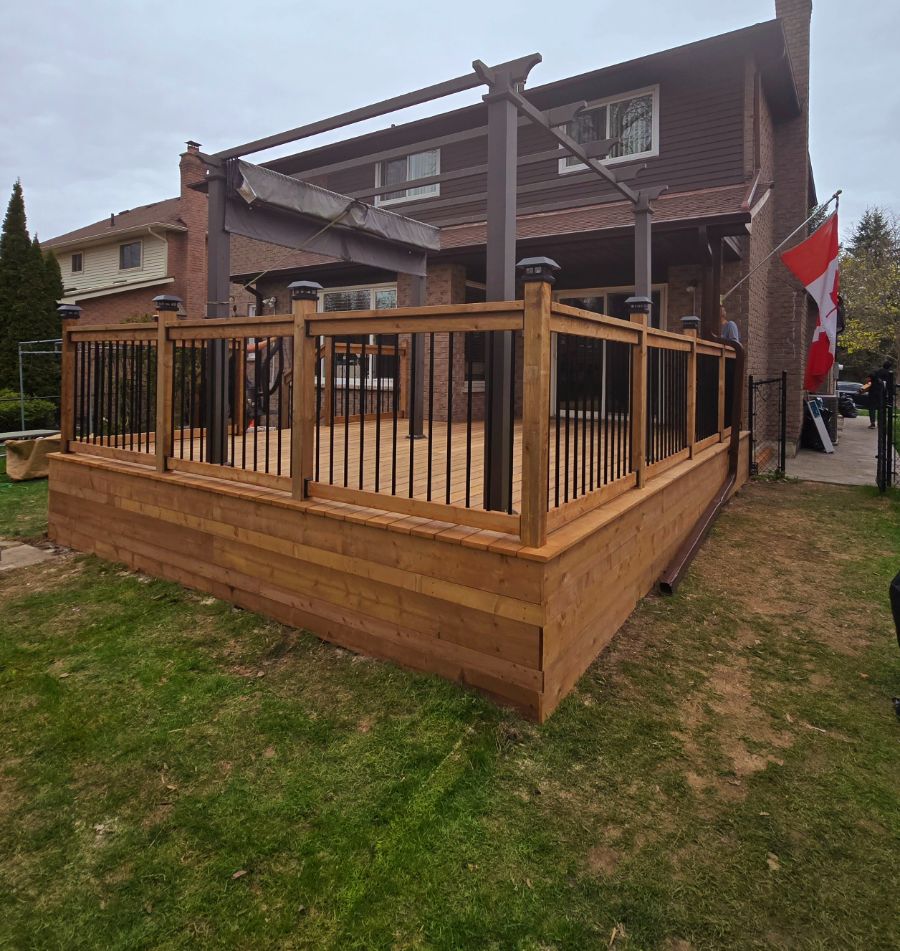
If you are planning a new deck in the Greater Toronto Area, the first real decision is the material: composite or pressure-treated wood. The short answer? Pressure-treated wood costs less upfront and gives you that classic natural look, while composite costs more to install but is nearly maintenance-free and lasts far longer. The right choice comes down to your budget, how much upkeep you want, and how you plan to use the space. Here is how the two stack up, especially against Ontario’s freeze-thaw winters.
Pressure-Treated Wood: The Budget-Friendly Classic
Pressure-treated lumber is real wood treated with preservatives that protect it from rot, insects, and fungal decay. It is the most affordable way to build a solid deck, and it delivers the warm, natural grain many homeowners love.
The trade-off is maintenance. To keep it looking good and prevent cracking or greying, a pressure-treated deck needs cleaning and re-staining or sealing every two to three years, particularly after harsh GTA winters. With that regular care, you can expect it to last roughly 15 to 20 years, and it can be refinished or repainted whenever you want a fresh look.
Composite Decking: Low-Maintenance and Built to Last
Composite boards are engineered from a blend of wood fibres and plastic, creating a dense core that resists moisture, scratches, stains, and extreme weather. That makes composite a strong match for our climate, where snow, rain, and road salt take a real toll on natural wood.
You pay more per square foot upfront, but you get years back in saved maintenance. No staining, no sealing, just the occasional wash. Quality composite from brands like Trex, TimberTech, and Fiberon can last 25 years or more, and comes in a wide range of colours and finishes that hold their look season after season.
Which Should You Choose?
Choose pressure-treated wood if you want the lowest starting price, love the look of real timber, and do not mind a weekend of staining every couple of years. It is a great fit for larger decks where budget matters most.
Choose composite if you would rather spend weekends on the deck than maintaining it. Over a 20-year span, the lower upkeep often makes composite the better long-term value, and it shrugs off the freeze-thaw cycles, heavy snow, and salt that define a Toronto winter. If you have a pool deck or a shaded, damp area that stays wet, composite’s moisture resistance is a clear advantage.
There is also a middle path many GTA homeowners choose: a composite surface built on a pressure-treated frame. You get the low-maintenance, weather-proof walking surface where it counts, while keeping costs down on the structure underneath. It is a smart way to enjoy the composite look and feel without stretching the full budget, and it is a popular option for families who want the best of both worlds.
Resale value is worth a thought too. A clean, modern composite deck can be an attractive selling feature, while a well-kept wood deck still adds warmth and usable square footage that buyers in Markham, Richmond Hill, and across the GTA appreciate.
Pro tip: Whatever material you pick, proper structure matters more than the boards on top. In the GTA, footings need to sit below the frost line (about 1.2 metres) so winter heaving does not shift your deck. That foundation is the difference between a deck that lasts two decades and one that needs repairs in five years.
Still not sure which way to go? The best choice depends on your yard, your budget, and how you like to spend your summers. A good custom deck design and installation team can walk you through samples of both and help you weigh the numbers before you commit, so your new backyard space is built right the first time.